
Don’t get alarmed. Pyoderma in dogs is one of the most common diseases in canines. Their skin features set them at a higher risk of infection. Take a sip of your favorite drink and read more about pyoderma to understand its cause and how to treat your pup!

The term pyoderma is a medical term for a bacterial skin infection. The barrier of the dog’s skin is thinner and has a higher pH than other species - welcoming normal bacteria to overgrow and bacteria invasion.
The severity of pyoderma falls into three categories:
As the first word implies, it affects the outer skin layer, the epidermis. Its characteristics are pink, irritated skin, and hair loss. It may also include
Going deeper into the layer of the skin - this condition also affects the epidermis and part of the hair follicles. It features circular crusts, redness, bumps, and hair loss. Moreover, it involves the following:
If superficial pyoderma progresses untreated or the skin follicle ruptures, your pet might suffer from swelling, “bruise”-looking areas, or draining tracts of infection - accompanied by redness, crusting, and hair loss.
Pyoderma in dogs is secondary to another illness or disease process. A complication of the following may provoke pyoderma in dogs.
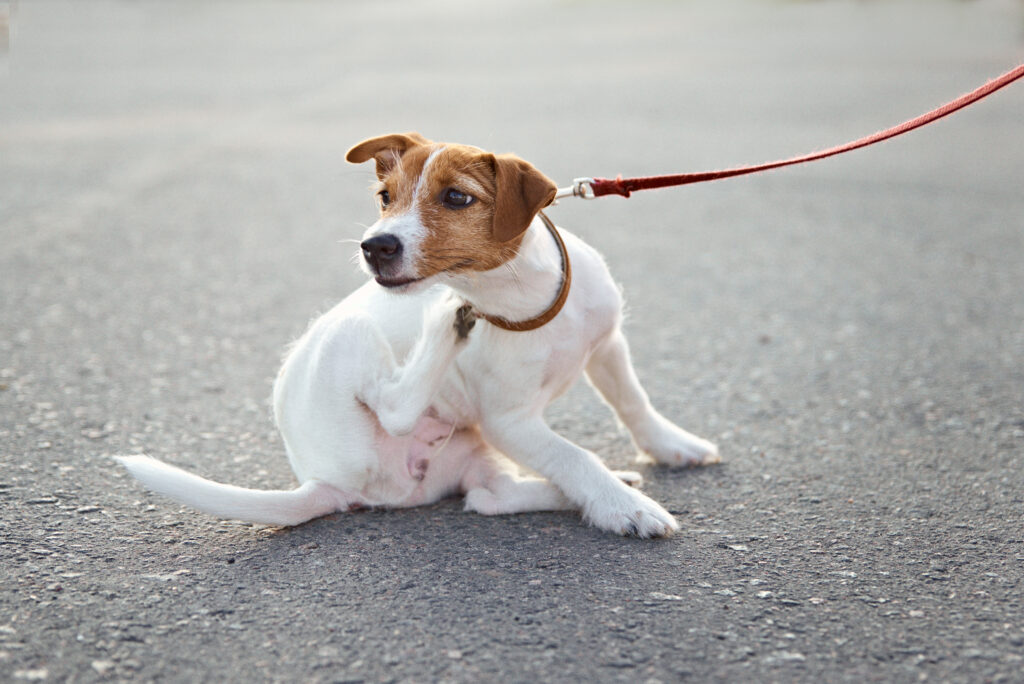
Staphylococcus pseudintermedius is a bacteria responsible for more than 90 percent of the cases. This type of bacteria inhabits the skin, but if the skin barrier is damaged or unhealthy, it can increase in number and cause problems.
Other bacteria infections
When infected with the bacteria Staphylococcus pseudintermedius, humans pose no risk for contamination. Rare cases involving staphylococcus aureus might spread to a person.
After your veterinarian properly diagnosed your dog with pyoderma; through a physical exam and some diagnostic testing.
Seek your veterinarian to do a physical exam. Diagnostic test performance may include:
Skin cytology: Samples of the infection observed under a microscope.
Skin scraping: Using a microscope to search for mites: Sarcoptes scabiei or the Demodex species.
Culture and sensitivity: A swab sample gets sent to a diagnostic laboratory for fungal, bacterial culture, or sensitivity testing. It takes several days but enables vets to know the specific type of bacteria, fungus, or both at the root of the cause.
Skin biopsy: Removes a section of the skin to be examined by a pathology laboratory if the infection is recurrent or the skin has an unlikely appearance.
Bloodwork: It may be necessary to support the cause of the skin infection.
Allergy testing: If allergies are suspected, your vet might propose an elimination diet trial to test for food allergies or intradermal allergies - with a veterinary dermatologist.
It’s time for the cone of shame or a recovery cone collar - an Elizabethan collar - to prevent your pet from licking or biting itself.
While that is going on, your vet might also recommend medications:
Antibiotics: Oral antibiotics are cephalexin, Simplicef, Clavamox, and clindamycin. An injectable antibiotic, Cefovecin, must be administered by a vet.
Anti-itch medication: Veterinary assistants must determine if the options Apoquel, Cytopoint, and steroids, anti-inflammatory, is safe for your pet.
Topical treatment is also encouraged and may consist of
Medicated shampoo: Its antibacterial and antifungal ingredients are helpful and may be recommended for the long term if your pet encounters recurrent infections.
Medicated spray, mousse, or ointment: With antimicrobial product to spray or rub. Its use in the long term depends on its occurrence.
“Clip and clean”: Vet staff may clip the surrounding affected area to prevent reinfection and allow ventilation. Then a gentle antiseptic will clean the area.
Epsom salt foot soaks: A soaking bath may be needed to ease inflammation and infection of its paws.
Witnessing pyoderma in your dog might not be pleasant; seeing their anguish. Meeting with your veterinarian will speed up the road to treatment for your pal and have good outcomes.
But even so, if deep pyoderma is severe, in rare and extreme cases, hospitalization is required.
Talk to Your Vet About AniViva!
Wouldn’t you want the best for your best friend? Protect their skin and coat it with minerals that strengthen and highlight their fur.
Learn how AniViva® Animal Serum can provide healthy fur protecting their coat from heat rash, allergies, and other environmental stressors.
Consider AniViva® Animal Gel to supply a nutritional aid to fur and skin issues.