
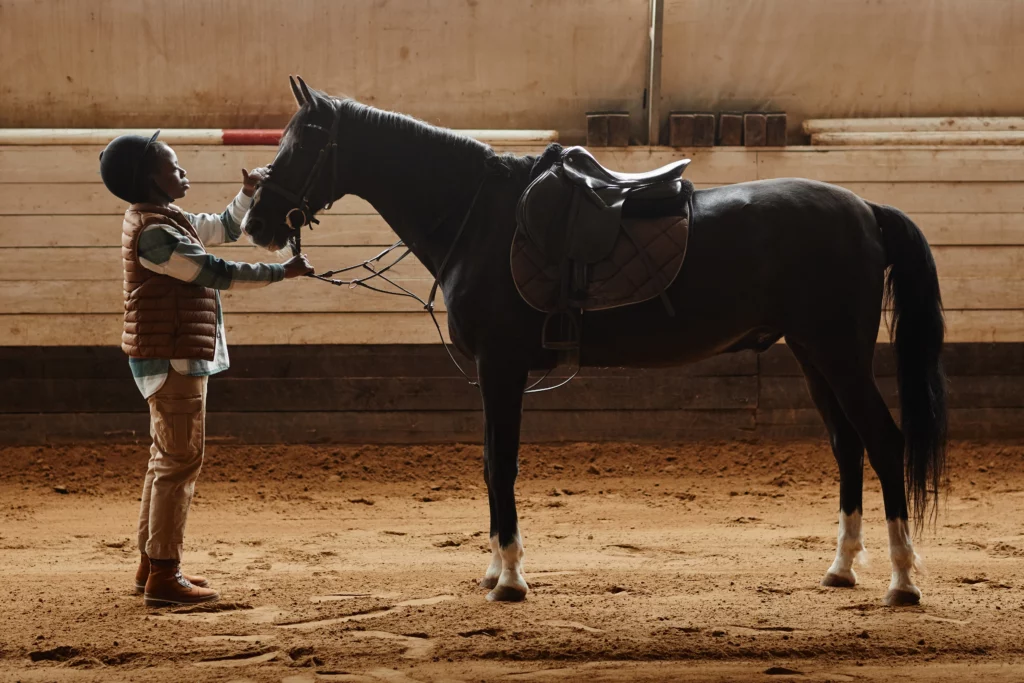
Are you a new horse owner? Or have you been neglecting your horse grooming duties?
Whatever the reason you are interested in learning how to grooming horses. Stick around as steps are discussed with some safety tips to make this chore successful!
Taking time to horse groom can be a bonding experience for both, so see it as a date with a friend. Make the moment enjoyable for both.
Get your combs ready, and let’s see what these steps are!
1. Secure your horse to avoid shifting around using a rope to tie them or have someone hold the rope for you. Use a quick-release knot to prevent injuries if something spooks your horse and they try to escape. Have a tool to loosen too-tight knots or to cut in an emergency, like the marlinspike, in case things go south.
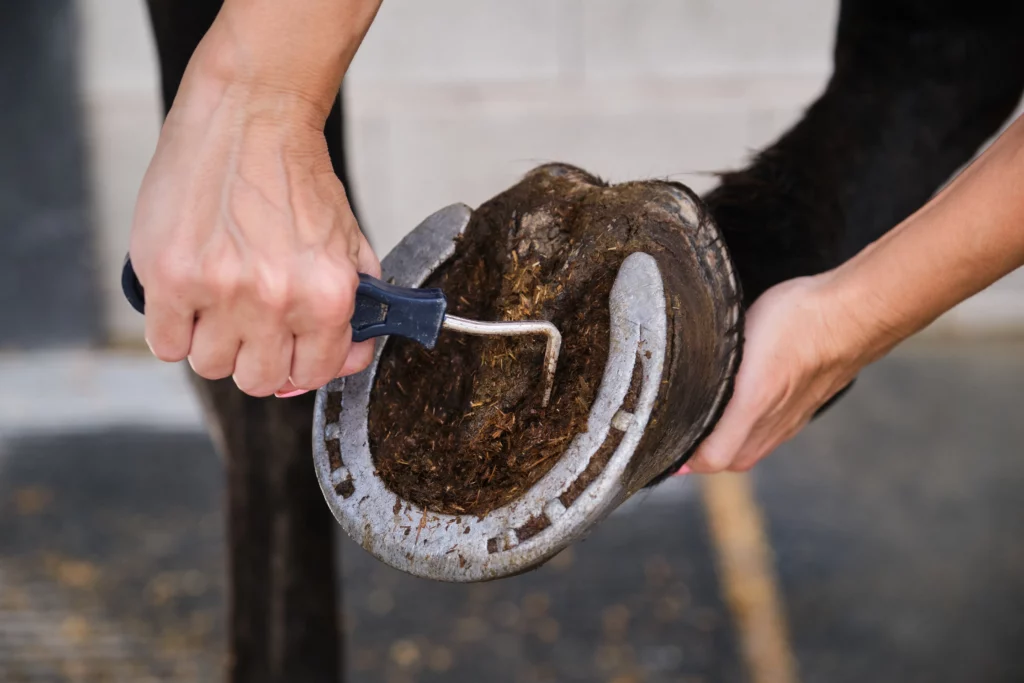
2. Clean your horse’s hooves! Don’t be afraid to run your hand down her leg and gently squeeze her tendon to lift her foot.
Start by picking out any large pieces of dirt or debris lodged in the hoof. You can do this with your hand, or use a horse hoof pick if you have one.
Next, brush or curry comb to remove any excess dirt or hair from the hoof. It will help you get a good look at the hoof's underside.
Check for any signs of infection, injury, or disease. If you see anything abnormal, consult your veterinarian immediately.
Finally, apply a coat of horse hoof polish (if desired) and admire your handiwork!
A recommendation is to clean their hooves before and after a ride.
3. Comb to remove loose hair from the horse. Use a rubber curry comb to clear out the dirt, mud, or anything jammed in your horse’s coat. Always do the currying before brushing your horse.
Apply small circular motions (opposite direction of the hair growth) over their muscles and be gentle on the face, spine, and legs. Consider a currycomb as giving your horse a massage. Start on one side of the horse from the neck, to the barrel, all the way to the rump. Continue on the other side. If you notice your horse is making a funny face, you have found an itchy spot. It might cause them to want to try to groom you too. Be careful since they may harm you. Push its nose away to stay safe.
4. Comb with a hard brush or dandy brush. A hard-bristled brush can take off the dirt and hair brought out by the currycomb. In short, straight and flicking motions, stroke from the neck and work towards the tail. No need to pass it through their legs since it can be hurtful; avoid their face, ears, mane, tail, legs, or any clipped area.
5. Use a soft brush to clean up. Give a nice brush-down on their entire body to remove the remaining dirt, and be considerate of sensitive areas. There is a face brush you can use.
6. Wipe down the horse’s face with a damp sponge or washcloth—clean their eyes and nose. Use a separate washcloth for the dock area, under their tail - it’s a sensitive spot. It will clear dirt and mucus build-up. Remember to use different grooming brushes if you have various horses. Sharing can spread infections and skin fungus!
7. Bush the tail and mane with a wide-bristle comb. Before brushing, use your fingers to detangle. Avoid tugging and grab the whole tail/large section of mane in one hand while you brush with the other. You may spray an all-natural hair product to moisturize and make their hair shiny. AniViva is an all-natural conditioner!
8. For Summer use a fly repellent. Protect your horse from an unpleasant time and potential infections transmitted by flies.
Wear appropriate shoes to protect your toes! Horses are heavy-weighted. Imagine the pain if they accidentally step on your foot.
Horses have blind spots - they can’t see in front or behind. Approach them through the sides and announce your presence.
Beware of a sudden kick. Do not stand behind your horse as you groom.
Position yourself in ways that allow you to move for a quick reaction. If your horse gets startled or frightened, you may need to remove yourself from a dangerous situation.
Move with deliberate calm. Reassure your horse with your gentle movements. Pay attention to their response as you groom your horse.
That’s the basics of grooming horses! A method with simple steps to protect and polish the health of your horse(s). Now, construct your preferred way around these founding instructions. It is about using different artifacts for specific body areas. Wear proper attire for your safety.
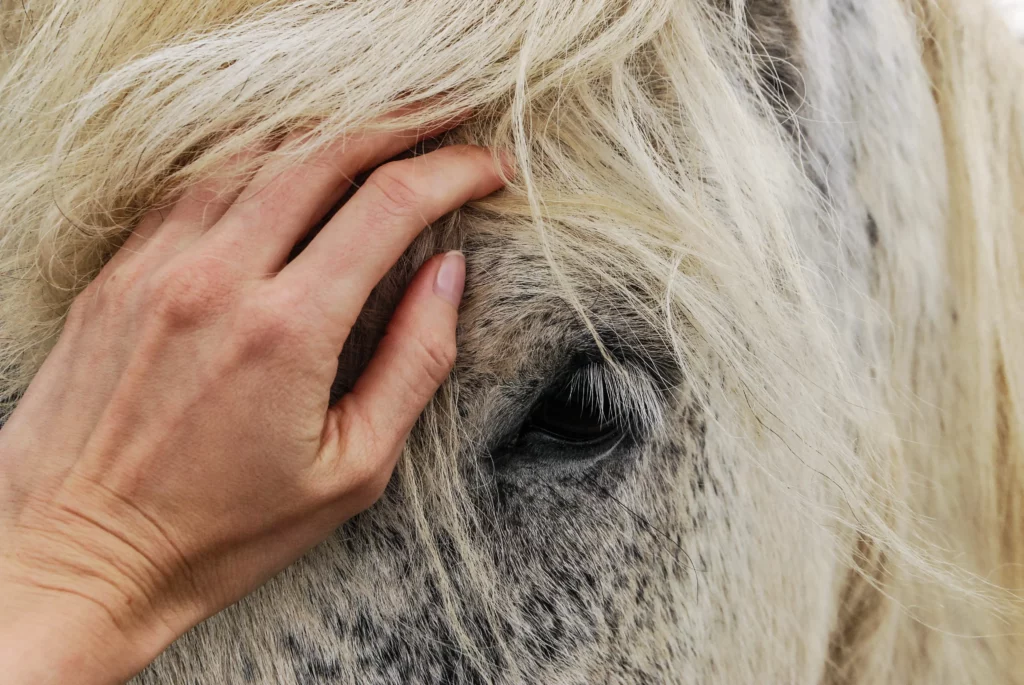
And be gentle and kind with your horse.
After your horses’ grooming routine, spray our potent AniViva® Animal Serum. A cosmetic skin serum made with all-natural ingredients that help to condition your horse's coat, mane, and tail. Look no further and get yours!
Visit AniViva to learn more about us.